The Daily Health
A 59-Year-Old Thought She Was Getting Dementia, Until a Physical Therapist Discovered What Was Happening to Her Neck Every Night
Rebecca F. from Dayton, Ohio, couldn't finish her sentences, got lost on roads she'd driven for years, and was sure she had Alzheimer's. Her brain scans came back perfect. The real answer turned up at a family birthday party.
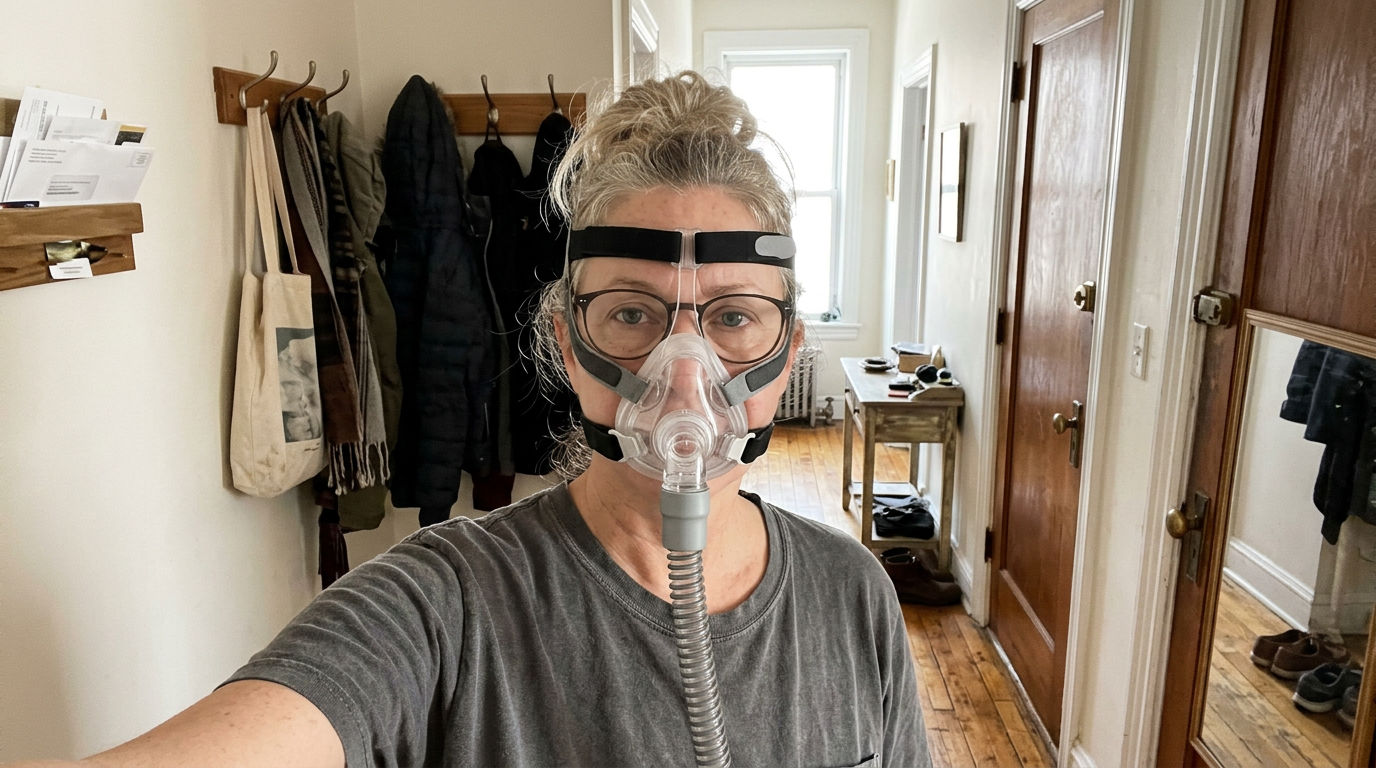
I remember exactly when I first got truly scared. It was a Tuesday in March, at our team meeting, with 14 colleagues in the room. I was standing at the front walking everyone through the quarterly plan, and I wanted to say, "Please put all the dates in your calendar."
But the word "calendar" was gone. Just gone. I stood there with my mouth open and every eye in the room on me. Three seconds. Five seconds. It felt like forever. Finally I said, "In the... the thing... where the appointments go."
A coworker jumped in. Everyone laughed for a second, kindly. But I saw it in their eyes. And all I could think was: this is it. This is the beginning of the end.
The Symptoms That Sent Me Into a Panic
Losing that word wasn't a one-time thing. It got worse, week after week. And it wasn't only words.
My symptoms, every single day
- I lost words in the middle of sentences. "Calendar" was only the start. Everyday words I'd used my whole life, just gone.
- I read the same email 3 times without understanding it. The letters were there, but my brain couldn't make sense of them.
- I stood in the grocery store with no idea what I came for, even though I had the list in my head when I left the house.
- I got lost driving to my dentist, a practice I'd been going to for 8 years. I suddenly didn't recognize the turn.
- By 3 PM I was useless. I'd stare at my screen, unable to finish simple tasks, on my 4th coffee with no effect.
- My husband said, "You asked me the same question 3 times in 10 minutes, and you didn't remember asking."
- I started writing everything down, because I couldn't trust my own head anymore.
I was 59 years old. My mother got Alzheimer's at 71. I thought: mine is starting 12 years early.
Most nights I couldn't sleep anyway, so I googled. "Early signs of dementia." "Alzheimer's at 59." "Why can't I find my words." Every result told me I was right to be scared.
The Appointment With the Neurologist
In May I went to see a neurologist. I'd already braced myself for the worst. I'd even started wondering if I needed a living will.
Dr. Hartman ran everything. A brain MRI. Memory tests. Full bloodwork. Thyroid. Vitamins.
Everything came back normal.
He looked at me and asked the question that changed everything:
"Your brain looks fine, Rebecca. But tell me something. How are you sleeping?"

I told him about the exhaustion. How I'd wake up feeling like I hadn't slept at all. How my husband said I snored so loud he'd moved to the couch most nights, and that sometimes I'd stop breathing in the middle of a snore. And the nights I'd jolt awake gasping for air.
He sent me for a sleep study. The results came back a week later:
Moderate obstructive sleep apnea. I was stopping breathing up to 29 times an hour.
The Diagnosis, Explained
"Your brain isn't getting enough oxygen at night," Dr. Hartman explained. "Every time you stop breathing, your oxygen level drops. Your brain gets yanked out of deep sleep dozens of times an hour. It never gets to recover."
"The fog, the lost words, the exhaustion, the crash at 3 PM. That isn't Alzheimer's. That's a brain fighting for oxygen every single night."
I cried right there in his office. But this time it was relief. It wasn't dementia. It was treatable.
At least, that's what I thought.
I Tried Everything. Nothing Worked.
What came next was 14 months of letdowns. I really did try everything they told me to.
Everything I tried, in order
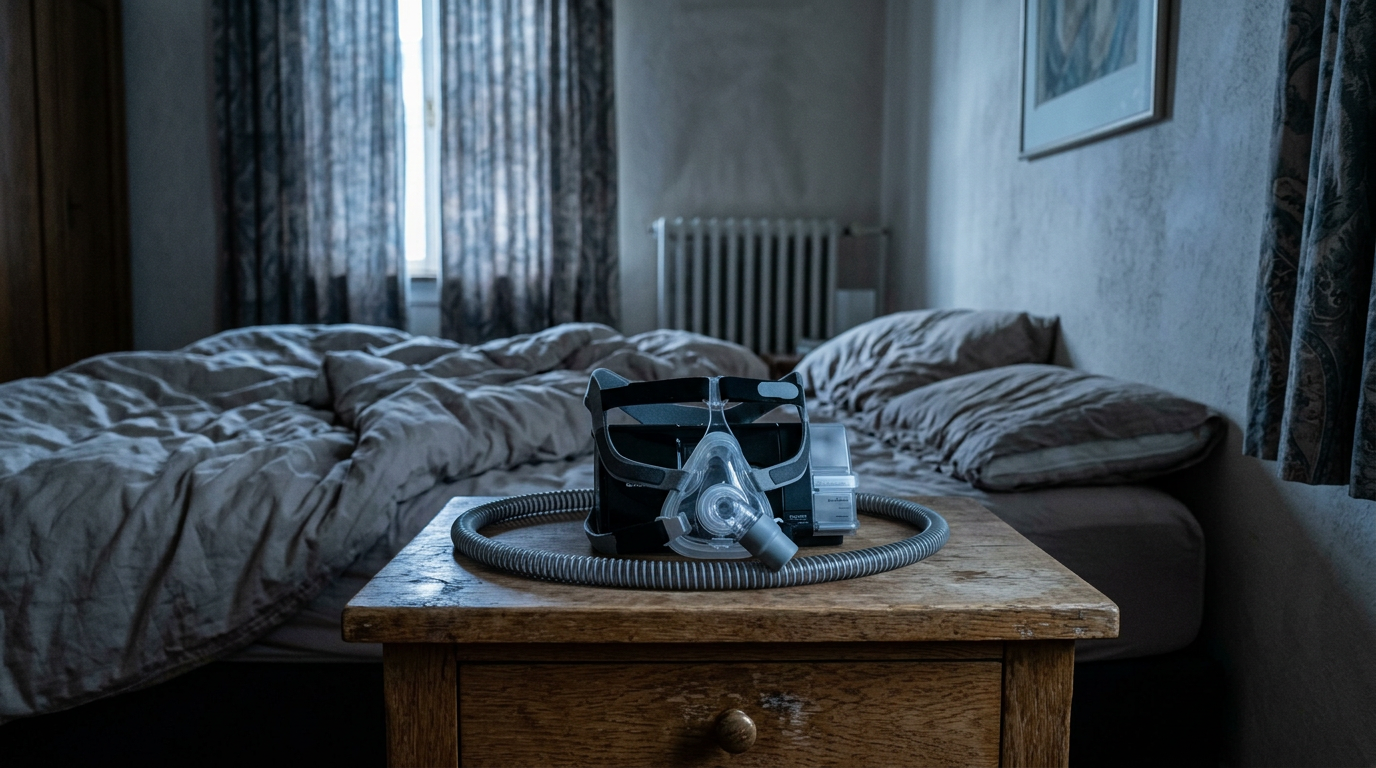
The first time I thought it couldn't get any worse was that fall. My manager called me into her office, closed the door and said, very kindly, that Dan would run the quarterly meeting from now on, "just to take something off your plate." I said thank you. Then I sat in my car in the parking garage for half an hour with the engine off. I'd run that meeting for 11 years. I kept thinking about Mom's first year, when the whole family started finishing her sentences for her and called it being helpful. Now somebody was being helpful to me.
It got worse. The moment I stopped fighting wasn't at work. It was at my own kitchen table. My 7-year-old granddaughter was coloring next to me, and I asked her what she wanted for lunch. She didn't even look up. "Grandma, you already asked me that. Twice."
That's when I gave up. I never decided to, I just stopped looking. I started accepting that this was my life now. That I was the woman who loses her words. Who stops working at 3 PM. Who has to write everything down.
I was barely 60, and I felt 90.
The Turning Point: A Conversation at a Birthday Party
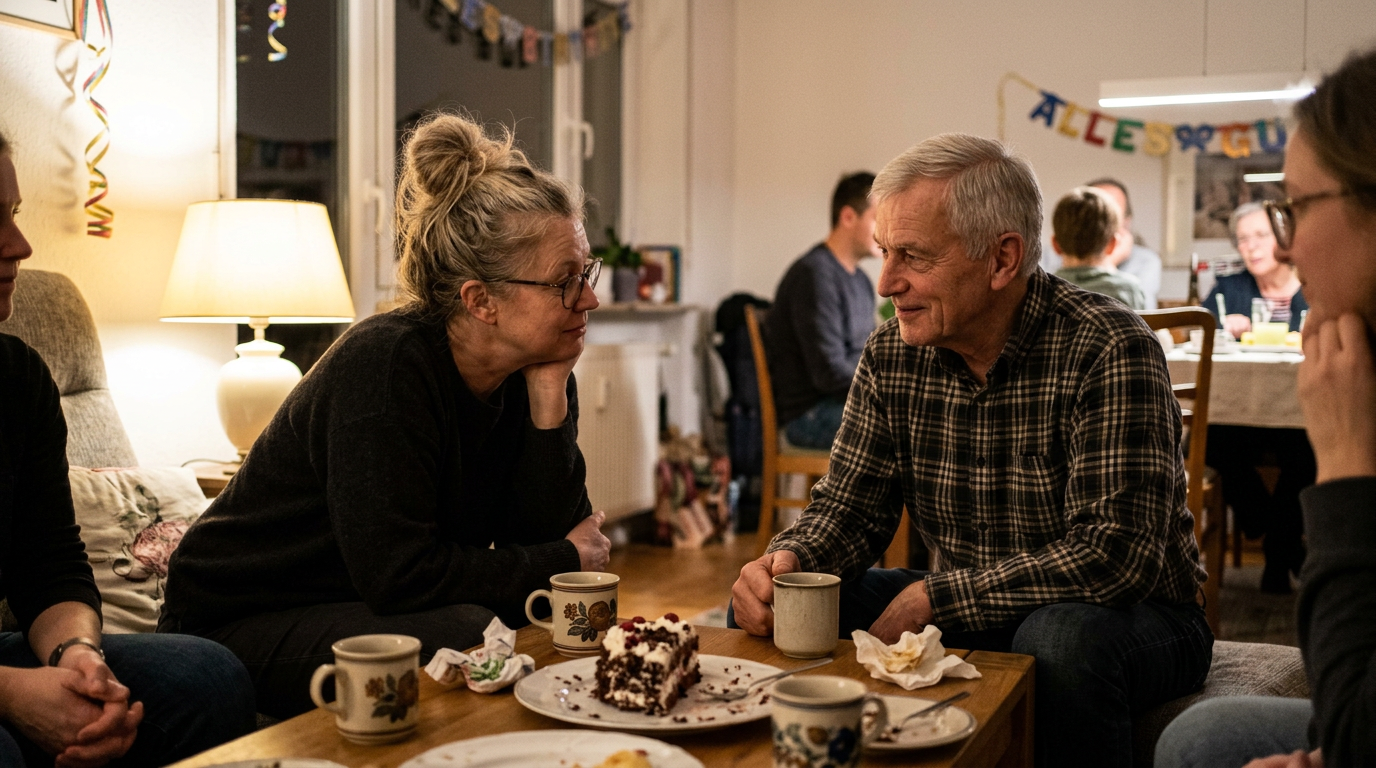
Last November, we went to my niece's birthday party. The whole family was there, cake and coffee. I was tired, like always, sitting off to the side. I wasn't even looking for answers anymore, which is probably why I actually listened.
My cousin Mark, a retired physical therapist, 67 and curious about everything, came and sat next to me. "Rebecca, you look wiped out. Are you okay?"
Maybe it was the moment. Maybe I was just too tired to keep my guard up. I told him everything. The apnea. The CPAP. The mouthpiece. The fog. The fear that I was losing my mind like my mother did.
Mark listened quietly. Then he asked something not one doctor had asked me in 14 months:
"Has anyone ever actually looked at your neck?"
Then he explained something that made so much sense, I couldn't believe nobody had said it before.
Why Snoring Is So Often a Neck Problem
For a lot of people, sleep apnea isn't only a breathing problem. It's also a position problem.
Your airway runs down the front of your neck like a soft garden hose. When your neck is in line, the hose is open. But when your pillow lets your head sink toward the mattress on your side, or tip back when you're on your back, your neck folds. Your jaw slides back, your tongue drops, and the soft tissue in your throat sags into the gap. The hose kinks, and air can't get through. That's the snoring, the stopped breathing, the oxygen drop and the fog.
A CPAP forces air through that kinked hose all night. But if the hose is kinked because your neck is folded, you're fighting your own neck for 8 hours. That's why so many people struggle with the mask. The pressure pushes air past the kink, but it doesn't change why the hose kinked.
That's why the position of your neck matters so much: keep it in line, and the hose is far less likely to kink in the first place.
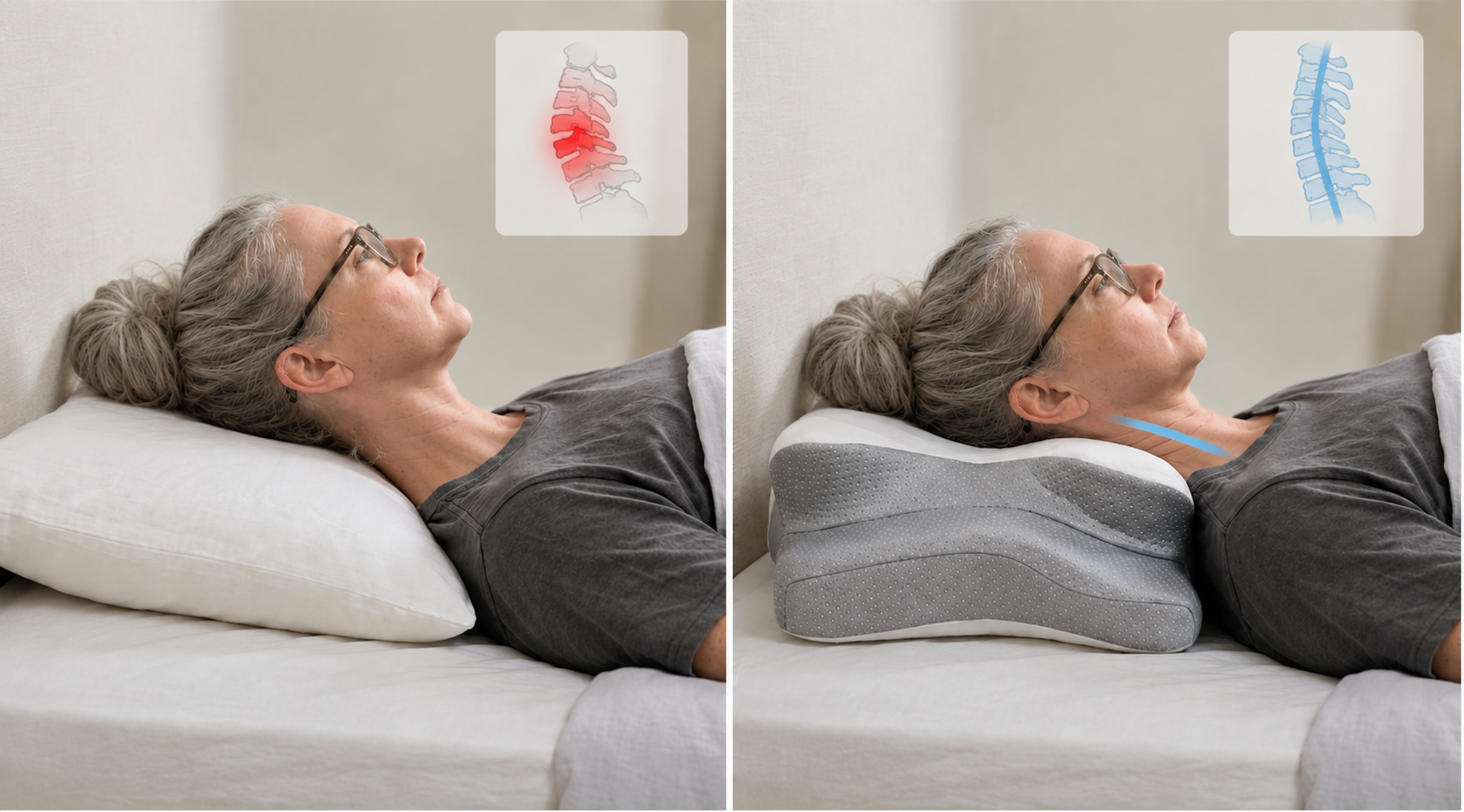
Mark said, "Keep your neck neutral all night, not folded down to the side and not tipped back, and the airway stays open. No collapse. No stopped breathing. Your brain gets its oxygen." Then he added, "And just rolling onto your side won't do it. If your head still drops toward the mattress, your neck still folds. It just folds sideways."
The Research Started at 11 PM. The Discovery Came at 1:30 in the Morning.
That same night, I sat down at my laptop. I found a long thread on r/SleepApnea full of people who'd given up on the mask, and research showing that the position of the neck affects whether the airway stays open or collapses during sleep.
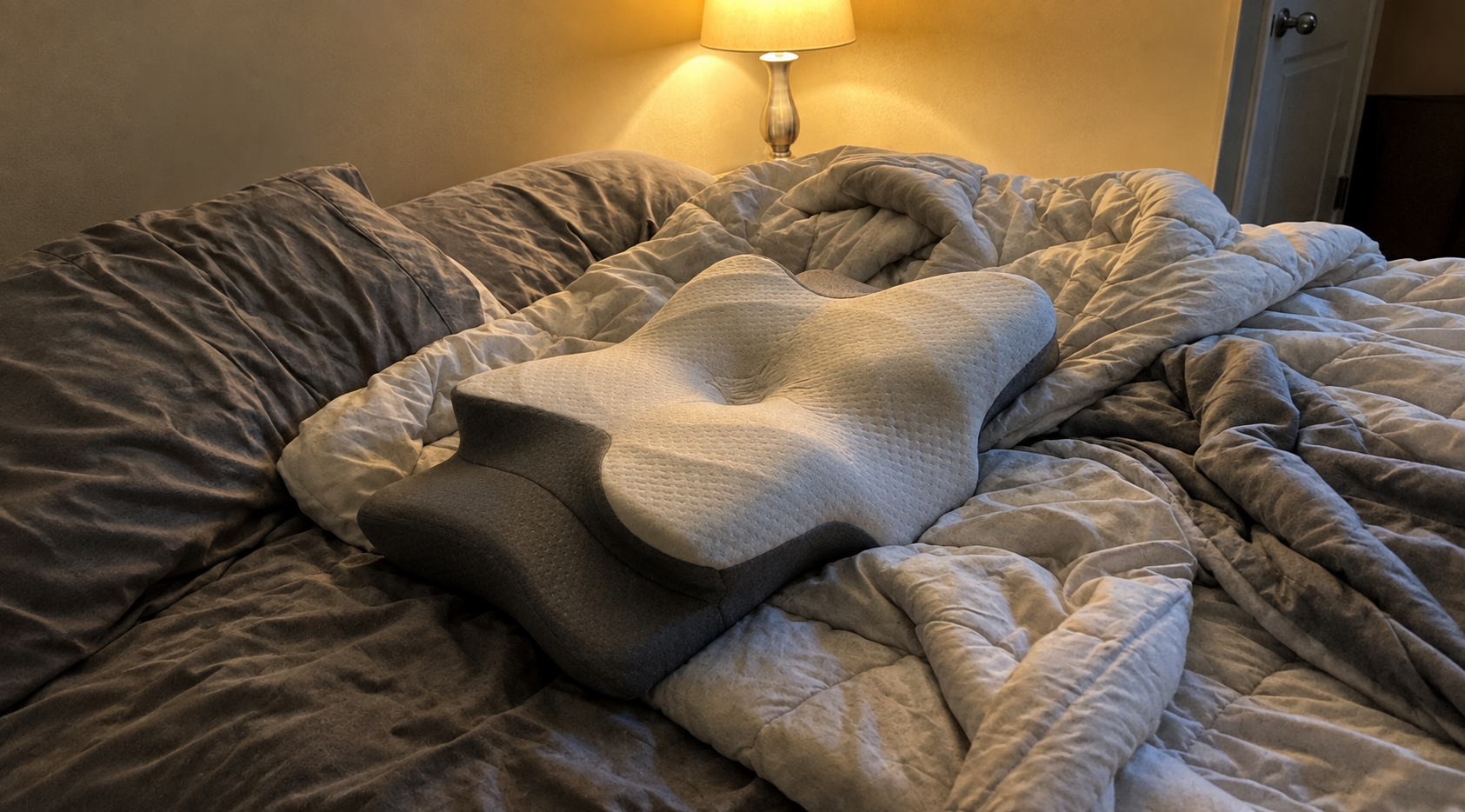
At 1:30 AM, I found the Neck Therapy Pillow. A butterfly shape with a hollow in the middle and 3 zones of support, built by a German engineering team working with a cervical spine specialist. It's made to hold the neck in a neutral line all night, whether you sleep on your side or your back, so the head can't sink down or tip back and pinch the airway.
It was sold out.
For 2 weeks I checked every morning. Every. Single. Morning. Like a crazy person. Until it was finally back.
The First Morning, and the Moment I Cried
The night it arrived, the pillow felt different when I lay down. My neck settled into that gentle hollow, and my head was held level, not drooping one way or the other. It felt right. Natural.
I woke up at 6:47 AM.
And something was different. Completely different.
The fog wasn't there. Not that heavy, thick blanket I'd been living under for months. Not that feeling of trying to think through wet cement. It was clear. My head was clear.
I lay there afraid to move, like moving might break it.
Rebecca's recovery
"I started crying at my desk. Real tears. Because I'd forgotten what it felt like to have my mind back."
I'm sharp again. Quick again. The person I thought I'd lost for good.

"My brain wasn't broken. It just needed oxygen. And it wasn't getting oxygen because my neck was in the wrong position."
Your 3 Options
If you see yourself in any of this, the words that vanish, the afternoon wall, the fear, let me tell you what I wish someone had told me at that kitchen table. You have 3 options:
If you've been diagnosed with sleep apnea, keep your doctor in the loop, and don't stop a prescribed treatment without talking to them first.
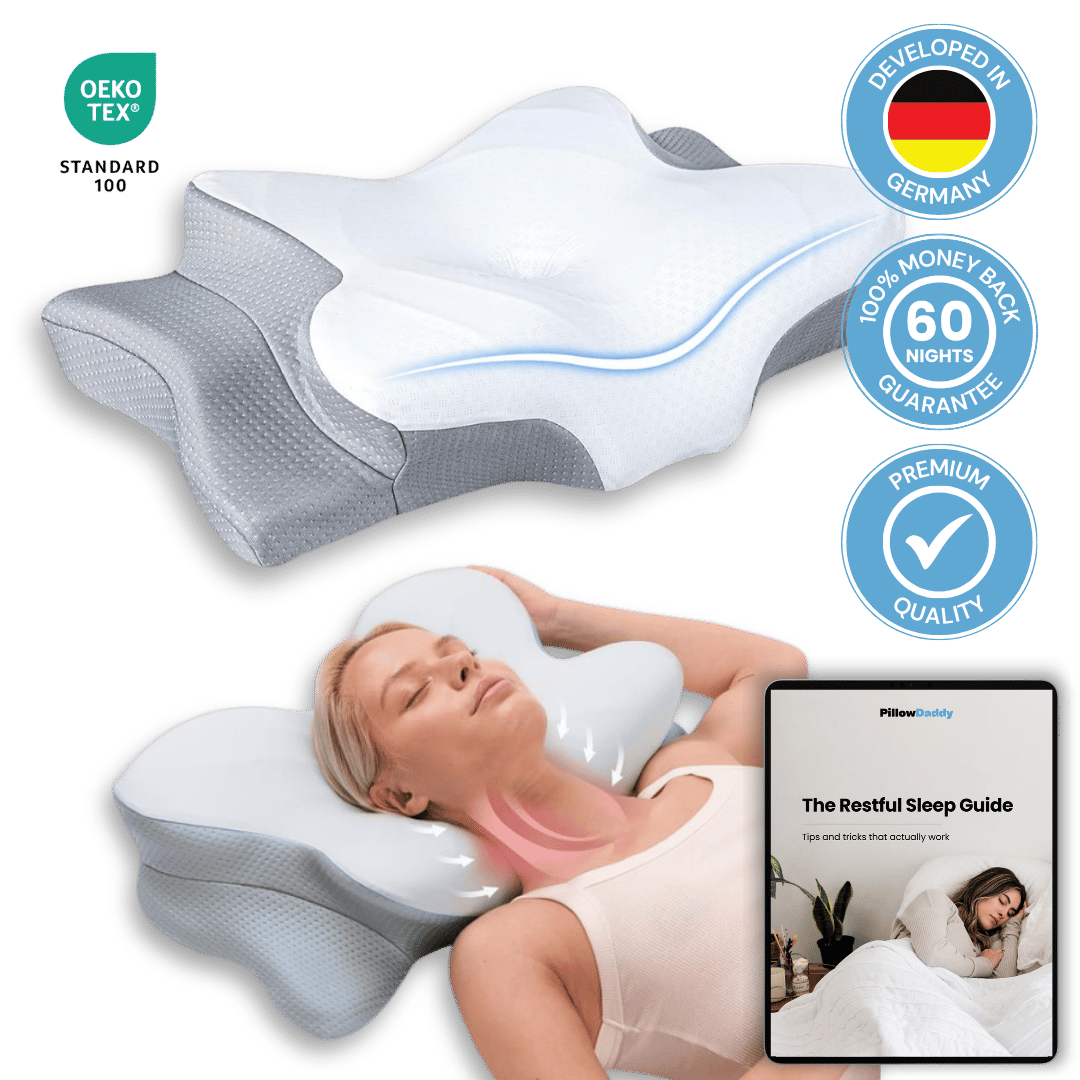
The Neck Therapy Pillow, Now 40% Off
Butterfly-shaped, with 3-zone support, designed by a German engineering team working with a cervical spine specialist.
Check Availability Now →Under $60 after 40% off, plus shipping | 60-night trial | Full refund if it doesn't work for you
What makes me angriest is this. I spent $1,550 on a machine and a mouthpiece, and nobody ever looked at my neck. Not a doctor. Not the sleep lab. Nobody.
The pillow cost me about $60. A fraction of what that mouthpiece cost.
And it gave me my mind back.
Important Warning: Fakes on Amazon
There are copies of this pillow on Amazon and other marketplaces. They use cheaper foam that can't hold its shape, or your neck's position. Order only from the official website, so you get the original with the real 3-zone support.
Brain Fog Doesn't Have to Be Your New Normal
Sleep on it for 60 full nights. If the fog doesn't lift, you get every penny back.
See the Neck Therapy Pillow →German-engineered | Over 189,000 customers | Rated 4.8/5 | 60-night money-back guarantee
Note: This is an advertisement. The story above is a dramatization based on customer experiences; names, photos and details are illustrative. Individual results may vary. The Neck Therapy Pillow isn't a medical device and doesn't diagnose, treat or replace medical care. If you think you may have sleep apnea, please see a doctor, and don't stop a treatment your doctor prescribed without talking to them first. The experiences described are personal and aren't a promise of results. This article contains affiliate links; if you buy through them, we may earn a commission at no extra cost to you.